

Employee Experience

Career pathways are powerful frameworks for showing employees the different routes their careers could take.
They set out the skills needed to progress, the options available at each stage, and the ways people can grow inside the organisation.
But without a way to actually develop those skills, pathways risk becoming little more than diagrams on a slide deck.
That’s where learning and development (L&D) comes in.
If career pathways describe the destination, L&D is the vehicle that gets people there.
Learning provides the training, coaching, and on-the-job experiences that allow employees to move along their chosen path.
When pathways and L&D are integrated, something transformative happens.
Employees don’t just see where they could go – they understand exactly how to get there. They can connect a course, a mentoring relationship, or a stretch assignment to a visible opportunity ahead of them.
Organisations, meanwhile, can be confident that training spend is directly building the capabilities needed for the future.

Despite the importance of L&D, most organisations struggle to get real results from it. Global spend on training exceeds $400 billion a year, yet fewer than half of companies report measurable outcomes from their programmes.
Engagement levels are low, skills gaps persist, and employees often see learning as a distraction rather than a driver of their careers.
The problem is that too much L&D happens in a vacuum.
Employees are given access to catalogues of content but no context.
They complete modules but don’t know how those translate into career progression.
Managers may encourage development, but without pathways to guide them, the conversation is vague.
As a result, skills gaps remain unaddressed, and the return on investment is minimal.
Career pathways solve this by providing context. They make learning meaningful. Instead of “do this course because it’s available,” the message becomes “do this course because it moves you closer to the role you want.”
That shift changes how employees engage – and it changes the impact learning has on the organisation.

Integrating L&D with career pathways doesn’t mean building more courses or buying another platform. It means aligning learning directly to the skills and opportunities mapped out in pathways.
For employees, this creates clarity: every learning activity is linked to a skill they need and a role they aspire to.
For managers, it provides a practical tool for coaching: they can show their team members which steps will prepare them for future roles.
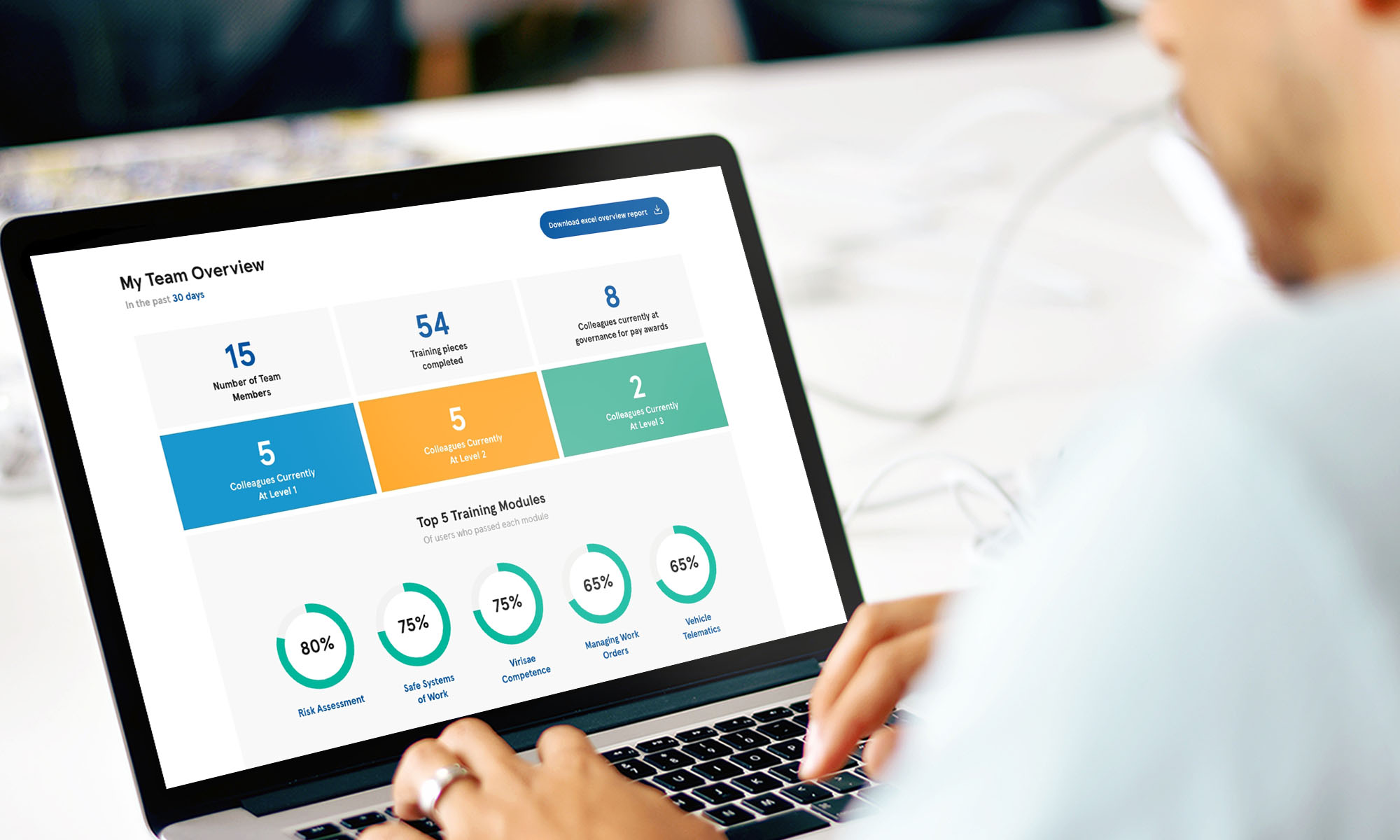
For HR and L&D leaders, it provides evidence of impact: they can track how learning translates into progression, retention, and performance.
Integration turns L&D from a cost centre into a strategic driver. It ensures that every pound spent on training is invested in building the skills that matter most.

So what does integration look like day to day?
It begins with mapping skills.
Career pathways identify the competencies required for progression into critical roles. L&D then aligns content directly to those competencies.
Instead of an overwhelming library of unrelated courses, employees see a curated set of options linked to their pathway.
Technology can support this by making learning personal.
Modern learning experience platforms (LXPs) and internal talent marketplaces can recommend content based on an individual’s skills, career aspirations, and pathway stage.
But technology is only part of the picture.
Managers are critical. They need to act as career coaches, reinforcing the link between learning and progression.
A manager conversation that says, “If you complete this project management training, you’ll be ready for the next role in your pathway,” is far more powerful than a generic push to “do some training.”
Integration also requires bringing learning into the flow of work.
Pathways should not rely only on formal courses. Microlearning, mentoring, job shadowing, and project-based assignments are all forms of development that move people forward.
The more that learning is embedded in everyday tasks, the more natural and sustainable it becomes.

Integration works best when it becomes cultural, not just procedural.
Leaders must position learning as a core part of strategy, not a side activity.
Managers must be rewarded for developing people, not just for hitting operational targets.
And employees must trust that following their pathway will open real opportunities.
Communication is essential. Employees need transparency about what pathways exist, what skills they require, and how learning will help them progress. When people can see the connection, they engage. When they can’t, they disengage.
Regular reviews are equally important. Both pathways and learning libraries must evolve as business needs change. Integration is not a one-time project but an ongoing cycle of alignment.

The true measure of integration is not how many courses people complete, but how effectively learning enables career progression.
Success shows up in several ways: more employees moving into new roles internally, shorter time-to-competency in emerging areas, higher engagement scores among those following pathways, and stronger retention of high-potential staff.
Skills data can provide further evidence, showing how the workforce’s capabilities shift over time.
By linking L&D to pathways, organisations can move from counting inputs (hours of training delivered) to measuring outcomes (skills gained, roles filled, business impact).
This gives HR and L&D leaders the evidence they need to prove the value of their work.

Why combine career pathways and L&D at all?
Because pathways without learning are empty promises, and learning without pathways lacks purpose. Together, they create a system where development visibly leads to opportunity.
What if budgets are limited?
Start small. Map a handful of critical pathways, align existing learning content to them, and pilot in one area. Integration is more about clarity and alignment than cost.
How do we keep both pathways and learning up to date?
Set review cycles. Skills needs evolve, so both frameworks and content should be updated regularly. Some organisations use AI-driven skill mapping, but even manual reviews can keep things fresh.
What if employees still don’t engage?
Engagement improves dramatically when learning is visibly tied to career goals. The clearer the connection, the stronger the motivation. Adding visible milestones – such as badges, recognition, or progress indicators – can also help.
How do we ensure fairness?
Make pathways transparent and learning accessible. When all employees can see the same opportunities, and managers are trained to support development equitably, access becomes more inclusive.

Career pathways show employees the possibilities ahead. L&D provides the tools to make those possibilities real. When the two are integrated, career growth becomes practical, measurable, and inspiring.
For employees, integration means clarity and opportunity.
For organisations, it means agility, retention, and a skilled workforce ready for the future.
And for HR leaders, it offers the long-sought answer to the ROI question: a clear link between learning investment and business results.
The shift is simple but profound: from training as a one-off activity to learning as the engine of transformation. That’s why integrating L&D with career pathways matters.
Tesco

Tesco
Tesco

Nomad Foods

Tesco

First Bus

Cognita
Cygnet
Galliford Try

LW theatres

Cygnet
Amazon
ACG

MARS
DHL
Cygnet
Electrolux
Vorbi